
Breathe Easy in Summer with All‑Natural, Naturally Dyed Scarves
If you live in a warm place, or you spend a lot of time in the sun, you probably know this feeling well: the air is hot, the light is strong on your skin, and even a thin synthetic scarf can start to feel like a plastic bag around your neck.
At the same time, you might want to feel a little more covered and protected. Maybe you are on your way to work, travelling through a new city, cycling, visiting a temple, or sitting down for meditation. A scarf can be a simple yet effective way to create comfort and a sense of ease around your body.

This is where all‑natural, naturally dyed scarves really shine. They give you:
- A soft, breathable layer between you and the sun
- Gentle, skin‑friendly colour from plants instead of harsh chemicals
- The flexibility to cover your head, shoulders or body without feeling weighed down
In this article, we’ll explore why natural fibres and plant‑based dyes make such a difference in the summer heat, how to use scarves in real life, and how Auroville’s collection of naturally dyed, organic cotton scarves can support a more mindful, comfortable way of dressing.
You can browse and shop all our scarves here:
Shop the Auroville Scarf Collection
Why natural fibres matter in hot weather
If you have ever pulled off a polyester scarf in the middle of a hot day and felt instant relief, you already know that not all fabrics behave the same way.
Synthetic fibres like polyester and many “blends” are basically a form of plastic. They can look pretty in a shop or online, but under a strong sun they often:
- Trap heat close to your skin
- Hold sweat and odour
- Create static and irritation
- Feel sticky or suffocating when wrapped
Natural fibres like organic cotton and linen, which you will find across Auroville’s Scarf collection, behave in a very different way.
They tend to be:
- Breathable, allowing warm air and moisture to move away from your body
- Absorbent, so sweat is gently wicked off your skin and can evaporate
- Softer and kinder on sensitive skin
- More balanced in temperature, so they feel comfortable in the heat and still pleasant in a cooler indoor space
If you hold a natural cotton scarf up to the light and see a soft, even transparency in the weave, that is usually a good sign. It suggests that air and light can pass through without the fabric feeling thin or flimsy.
Auroville’s organic cotton and handwoven styles are created with exactly this in mind and are available to shop here:
Handwoven & Organic Scarves at Auroville
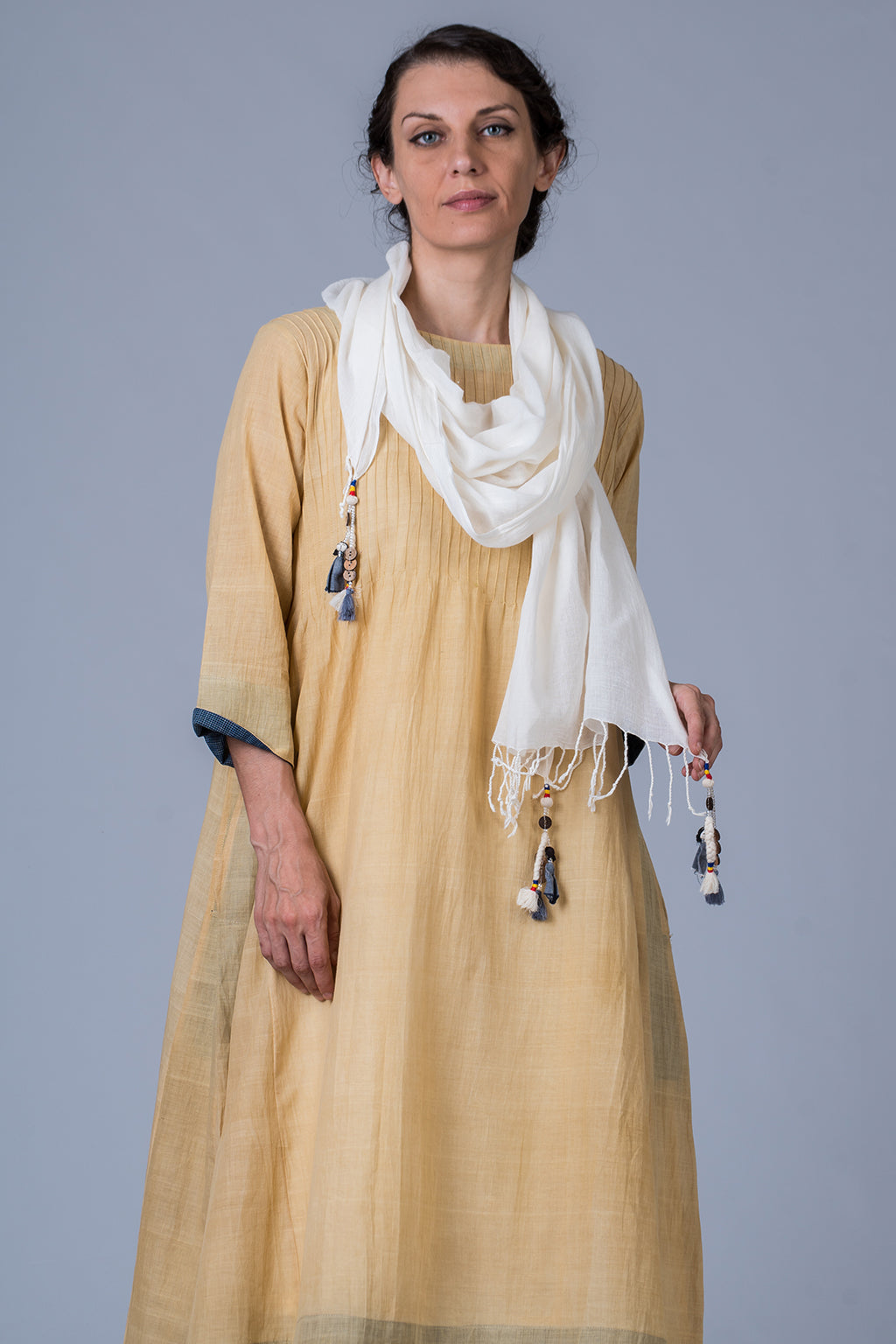
The quiet beauty of natural and plant‑based dyes
The material of a scarf is one part of the story. The colour on that fabric also matters – for your skin, for the environment and for how the scarf ages over time.
Many conventional scarves are dyed with synthetic chemicals. These can be harsh on the skin, hard on water systems and often disconnected from any craft tradition.
Naturally dyed scarves take a different path. In our collection, you will find pieces where the colour comes from plants, bark, leaves, flowers and traditional dye materials. These could include:
- Plant‑based blues
- Root‑derived reds and warm tones
- Soft yellows, earthy browns and gentle greens from different botanicals
The result is colour that feels quieter and more grounded. It often has small variations and depth that give each scarf its own character, instead of a flat, uniform shade.
For people with sensitive skin, plant‑dyed fabrics can also feel easier to live with. They are not guaranteed to solve every sensitivity, but many people notice that their skin responds more calmly to natural fibres and dyes than to synthetics.
You can explore naturally dyed cotton scarves and handblock‑printed pieces here:
Shop Naturally Dyed Scarves

Gently varying shades of natural colour; each scarf carries its own subtle story.
How a breathable scarf protects you in the heat
It can sound strange at first: if it is already hot, why would you add another layer?
The key is to choose a scarf that is light and open enough to let air move, while still creating shade and softness between you and the outside world.
Gentle sun protection
A natural‑fibre scarf can protect:
- The delicate skin on your neck and chest
- Your shoulders and upper back
- The top of your head and your hair
- The sides of your face when the sun is very strong
Instead of applying yet another layer of sunscreen, you can sometimes simply lift a part of your scarf over the area that feels exposed. Because the fabric is breathable, this usually feels like stepping into the shade, not into a sauna.
Many of our scarves are designed exactly for this kind of everyday use. A soft organic cotton or cotton–linen blend can move with you from street to bus to office to temple without becoming heavy.
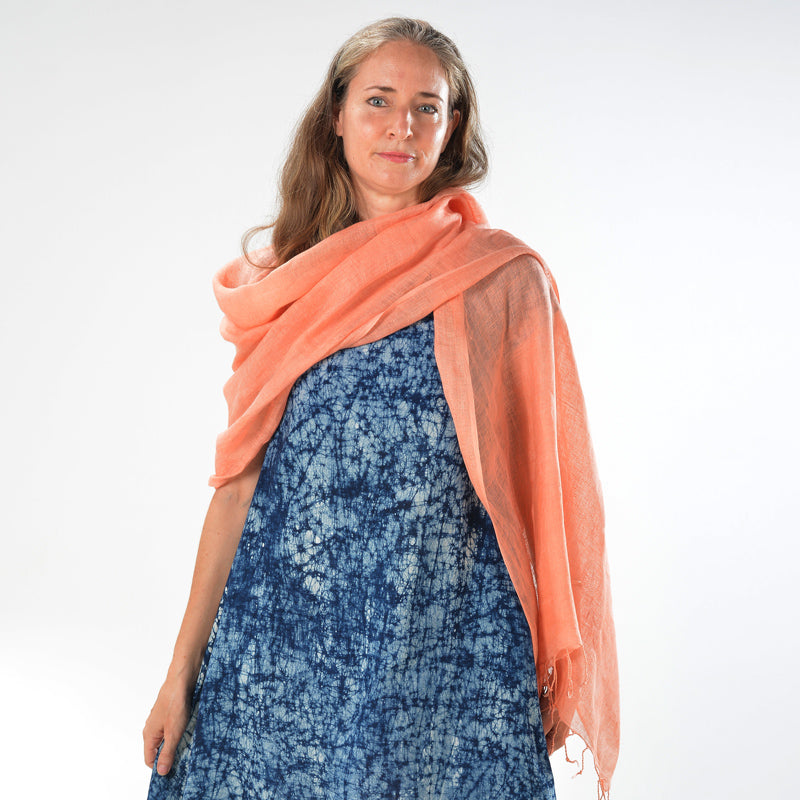
A light scarf turns strong sun into a softer experience, especially on the head and neck.
Head coverage that still lets you breathe
Covering your head is common in many cultures and spiritual traditions, and for good reason. The top of the head is very exposed to sun and heat.
The problem comes when the fabric is too thick or not breathable. Then you end up sweating, feeling pressure, and often pulling the scarf off as soon as you can.
With a fine, natural‑fibre scarf you can:
- Wrap your head loosely and still feel air moving around your ears and neck
- Keep hair away from your face when cycling or walking
- Reduce the direct impact of intense midday light
Because the weave is open and the fibre itself is breathable, you get protection without that “helmet” feeling.
Real‑life ways to wear a scarf in summer
A scarf does not have to be complicated. Here are a few very practical, human ways to use one scarf through your day in warm weather.
1. Loose neck drape
When you are on the move, a simple drape can be enough.
- Let the scarf hang around your neck with both ends down the front.
- Keep it open and relaxed, not wound tightly.
- As the sun moves, you can shift the scarf: a little over one shoulder, a little over your chest, or briefly over your head.
This is a good option for lightweight organic cotton scarves that feel like a second skin rather than an extra garment. You’ll find many of these in the Auroville scarf collection.
2. Shoulder shawl for modesty and comfort
If you are visiting a place of worship, entering a more traditional environment or just want to feel more contained in your body:
- Spread the scarf over both shoulders, like a soft shawl.
- Let it fall freely, or cross one side over the other when you need a bit more coverage.
- When you sit down, the scarf moves with you, instead of clinging like some tighter garments do.
Here, a cotton–linen blend or a slightly larger organic cotton scarf works well and you’ll find several options ready to shop in our collection.
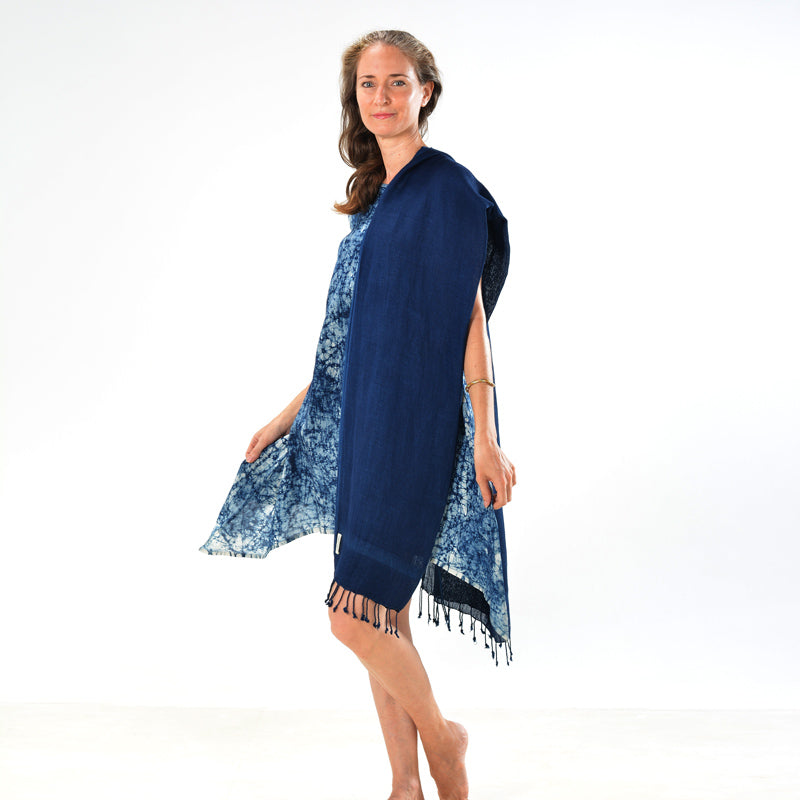
A simple drape over the shoulders can make public spaces and travel feel more comfortable.
3. Quick head and face cover for dust and sun
There are moments when the practical need appears suddenly: a dusty road, an unexpectedly bright stretch of sun, a windy auto‑rickshaw ride.
A scarf can become:
- A light face cover to soften dust and fumes
- A small hood that shades your eyes and ears
- A way to keep your hair from tangling in the wind
You do not need a complicated wrap. Even lifting one end over your head and letting it fall naturally can be enough to create a bit of a cocoon while you move.
4. Simple travel companion
Many people who travel regularly find that one good natural scarf replaces several other items. It can act as:
- A thin blanket on flights and trains
- A respectful cover for temples and community spaces
- A quick wrap if the weather changes
- A small layer to sit on during meditation or yoga
A mid‑toned, naturally dyed cotton scarf often works best here: not so light that every speck of dust shows, and not so dark that it absorbs too much heat.
To find a travel‑friendly scarf, browse mid‑tone organic cotton designs in the Auroville scarf collection.
Why Auroville scarves resonate with mindful, eco‑conscious buyers
Auroville is more than a name on a label. It is an experimental township in South India, rooted in ideas of human unity, sustainability and conscious living. Those values quietly filter into the textiles and clothing that come from its different units.
Handcraft and small‑scale production
Many scarves in our Auroville scarf collection are:
- Handwoven on traditional looms
- Naturally dyed in small batches
- Handblock printed with wooden blocks and plant‑based dyes
This kind of work is slower than large industrial production, but it creates a different relationship between people, materials and place. Each scarf carries traces of the hands that made it, and the natural variations that come from real craft.
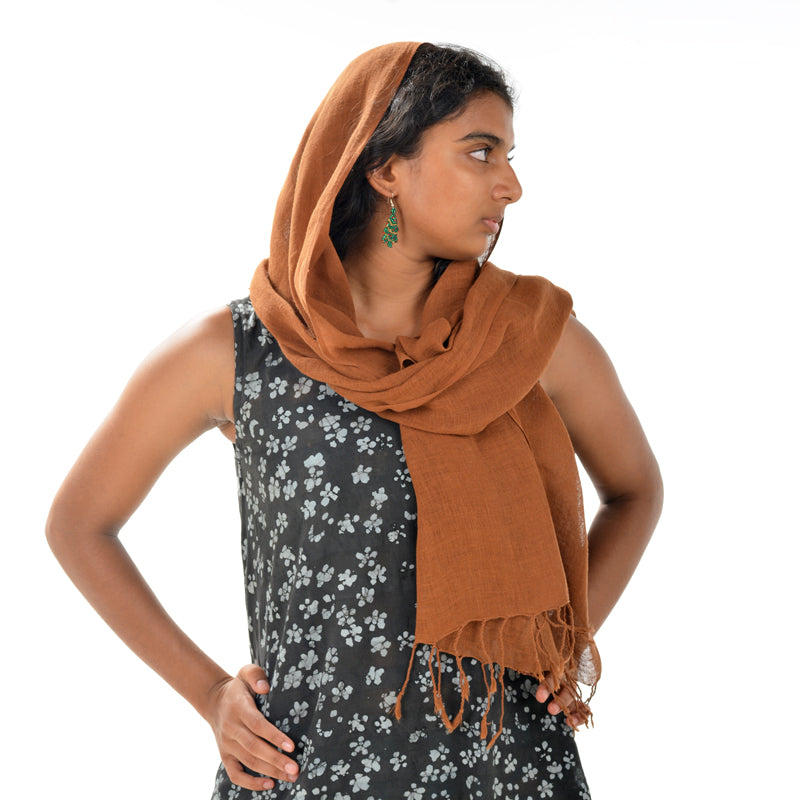
Handwoven texture and natural dye variations give each Auroville scarf a unique, alive feel.
Natural materials at the centre
As you browse the scarves at Auroville, you will see a clear emphasis on:
- Organic cotton
- Handspun cotton
- Cotton–linen blends
- Light linen
These are not chosen by accident. They are fibres that breathe, that feel kind on the skin, and that can be worn in hot climates without discomfort.
When you combine these fibres with natural dyes, you get pieces that are easier on your body and on the earth than most synthetic alternatives.
Taking care of naturally dyed, all‑natural scarves
Natural and organically dyed scarves are not fragile, but they appreciate a bit of attention. With a few simple habits, you can keep them soft and beautiful for years.
Washing
- Hand wash in cool water with a mild, gentle soap.
- Do not use bleach or very strong detergents; these can strip plant dyes.
- Wash darker or brighter colours separately at first in case of slight colour release.
If you need to use a machine:
- Choose a delicate or hand‑wash cycle.
- Use cold water and a mild, eco‑friendly detergent.
- Place the scarf in a mesh bag to reduce friction.
Drying
- Squeeze out water gently; do not twist or wring.
- Dry in the shade rather than direct, harsh sun.
- Lay flat or hang without sharp clips that can mark the fabric.
Ironing and storing
- Iron on low to medium heat.
- For printed or delicate surfaces, iron on the reverse side.
- Store folded in a clean, dry place, away from long hours of direct sunlight.
These small acts of care are a continuation of the respect that went into making the scarf in the first place.
Choosing your Auroville scarf for this summer
If you are wondering where to begin, here are a few questions that can guide you as you explore our collection.
How hot is your summer?
- For very hot and humid climates, choose the lightest handwoven organic cotton you can find. Look for open weaves and soft drape in the Auroville scarf collection.
- For mixed conditions (hot outdoors, colder indoors), a cotton–linen blend scarf gives a bit more structure while still breathing well.
How sensitive is your skin?
- If your skin reacts easily, look for organic cotton scarves that are naturally dyed in softer, earthy tones.
- Avoid very intense synthetic‑like colours and heavy finishes; opt instead for pieces that feel soft and quiet when you touch them.
How do you move through your day?
- If you cycle, walk a lot or move between different spaces, choose a scarf that can be worn as both a headscarf and a shoulder cover.
- If you travel often, look for a mid‑sized scarf that can act as a small blanket or modesty cover when needed.
You can explore styles, colours and weaves here and shop directly:
Explore & Shop Auroville Scarves
Frequently Asked Questions About Naturally Dyed Summer Scarves
Are naturally dyed scarves good for sensitive skin?
Many people with sensitive skin find that naturally dyed, organic cotton scarves feel gentler than synthetic options. Plant‑based dyes and natural fibres tend to breathe better and create less irritation. However, if your skin is very reactive, it’s always wise to start with a short wear and notice how your body responds.
Can I wear a cotton scarf in very hot weather?
Yes. A lightweight, loosely woven organic cotton scarf can actually make hot weather more comfortable. It creates a soft layer between your skin and the sun, helps absorb sweat, and still allows air to move freely. This is why so many people in hot climates rely on natural cotton summer scarves every day.
How do I wash a naturally dyed scarf?
Wash your naturally dyed scarf in cool water with a mild, gentle soap. Hand washing is ideal, but a delicate machine cycle in a mesh bag can work if you are careful. Avoid bleach and very strong detergents, and dry the scarf in the shade rather than direct sun to help the natural colours stay rich over time.
Will a naturally dyed scarf fade?
Natural dyes may soften slightly with years of wear and washing, but this is usually a gentle, even change rather than harsh fading. If you wash your scarf in cool water, use mild soap and dry it in the shade, it will age gracefully and keep its character for many seasons.
Where can I buy organic cotton scarves from Auroville?
You can explore the full range of organic cotton, naturally dyed and handwoven scarves here:
Auroville Scarf Collection
